Feeds & Speeds Calculator
Conservative starting values — the numbers that are unlikely to break a tool or burn a part. Listen to the cut and adjust: squealing/chatter → slow the feed or RPM; chips turning blue → reduce RPM.
How the numbers are computed
RPM = SFM × 3.82 ÷ diameter (in). Surface speed (SFM) comes from the material table below; carbide runs 3–4× faster than HSS. Milling feed = RPM × chip load × flutes. Slotting multiplies chip load by 0.75 (the cutter is fully engaged). Drilling uses a feed per revolution of roughly 0.02 × diameter, reamers run at half RPM with a high steady feed.
| Material | HSS (SFM) | Carbide (SFM) |
|---|---|---|
| Aluminum (6061) | 250 | 800 |
| Brass / bronze | 200 | 500 |
| Mild steel (1018) | 80 | 300 |
| Alloy steel (4140) | 60 | 250 |
| Stainless (304) | 50 | 180 |
| Cast iron | 70 | 250 |
| Titanium (Ti6Al4V) | 40 | 120 |
| Tool steel (annealed) | 45 | 150 |
| Plastic (Delrin, nylon) | 300 | 600 |
Chip load is scaled by material: plastics/aluminum use the full value in the table below, brass 0.8×, steels 0.7×, stainless 0.6×, titanium 0.5×. Base chip load per tooth: 1/8" → 0.001", 1/4" → 0.002", 3/8" → 0.0025", 1/2" → 0.003", 3/4" → 0.004", 1" → 0.005".
End mills & cutters in stock
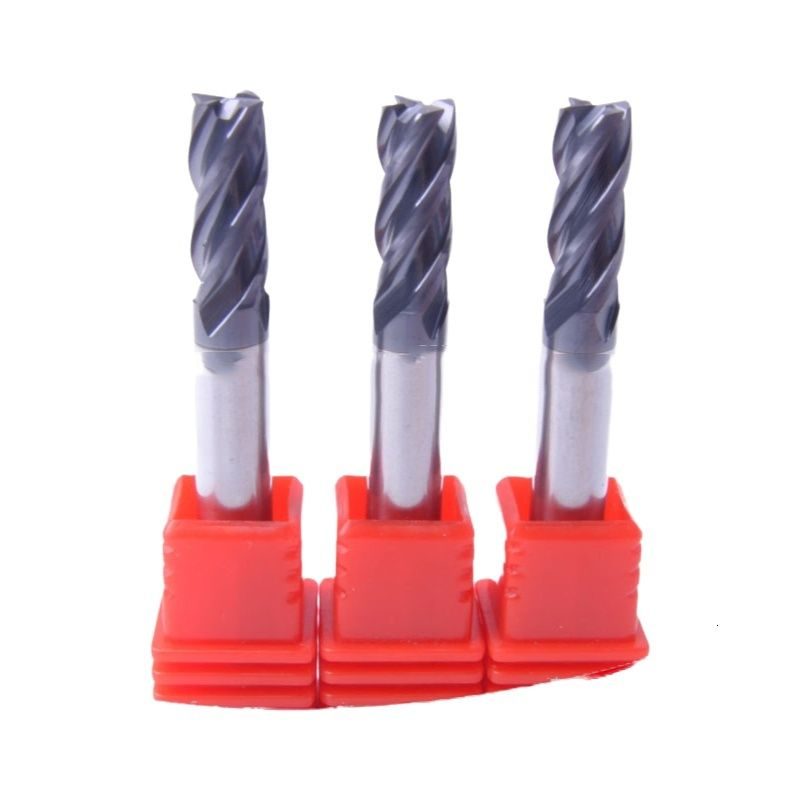 CNC Solid Square Bits Coated Mills for Steel Milling Cutters and
CNC Tools $55.28
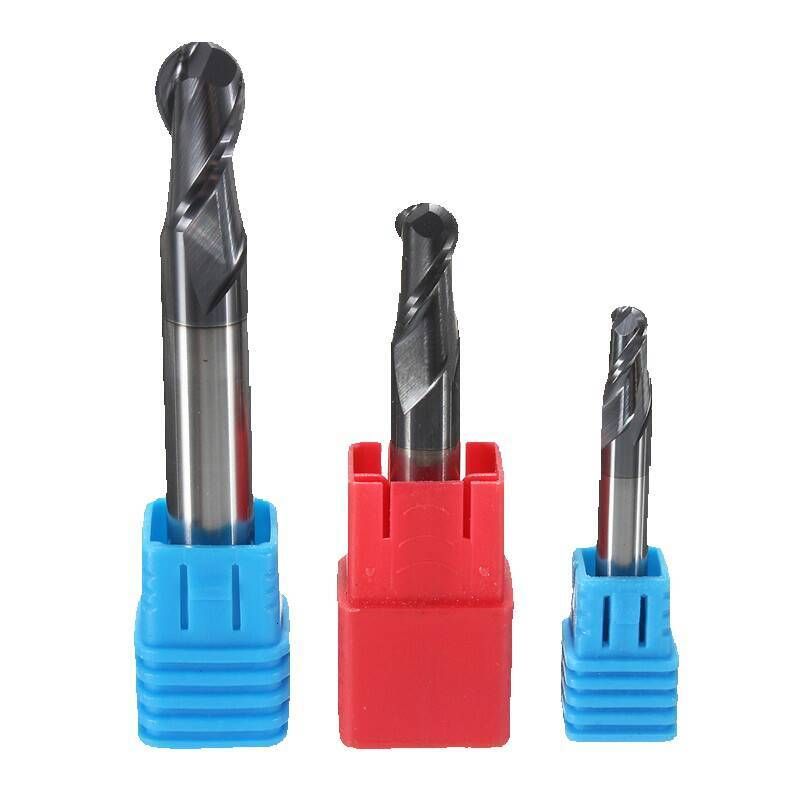 High Precision Tungsten Nose Milling Cutter with Black Nano Coat
CNC Tools $50.26
 Golf Putter Oc Forward-Inserted Low-Torque from Cnc Precision-Mi
CNC Tools $167.09
 Golf Putter CARBON MASTERSON Forged 303 Steel with CNC Milled cl
CNC Tools $135.68